Our Results
What did we find?
Additional Analyses
As well as routine sampling from the river Swale SoS has also sampled from tributaries and from effluent discharges. These give a broader view of the river and of pollution sources.
Tributaries sampled include ones at Wainwath, Hudswell beck, Gilling West beck, Colburn beck, Skeeby beck and at Catterick. Levels of pollutants in these vary but in some samples were elevated including readings of 30,000 coliforms per 100 ml at Gilling West, 11,000 in Colburn beck and 3,750 in Skeeby beck. Samples at other times for these locations were within the recommended limits indicating variable inputs of effluent and, potentially, agricultural releases.
More detailed analyses were conducted on effluent samples from the Richmond treatment plant at Easby. Results of four separate analyses are summarised in the table below indicating consistently high levels of ammonia, phosphate, coliforms and E. coli. Although these will be diluted in the river flow they will contribute to levels downstream, particularly at Brompton.
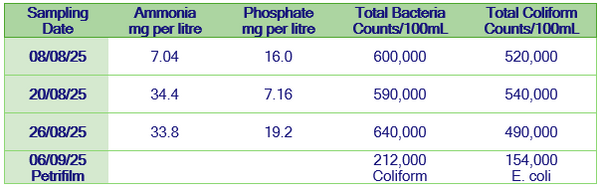
Identification of coliform colonies was conducted by DNA analysis and indicated a predominance of E.coli but also presence of Klebsiella pneumoniae, Acinetobacter baumanni and Citrobacter freundi – all of which are potentially pathogenic. Furthermore, Acinetobacter baumanni is often associated with antibiotic resistance.
Further studies at the University of Sunderland indicated that bacteria resistant to β lactam, sulphonamide and tetracycline antibiotics were present in samples though the river course with some high levels in upper stretches suggesting local release from agricultural sources.


Invertebrate monitoring
A separate initiative to sample river invertebrates between spring and autumn generated further data on river health and allowed for a correlation with chemical and microbiological results. Methods followed protocols used nationally by the River Fly Partnership and targeted larvae as indicators of good quality water.